
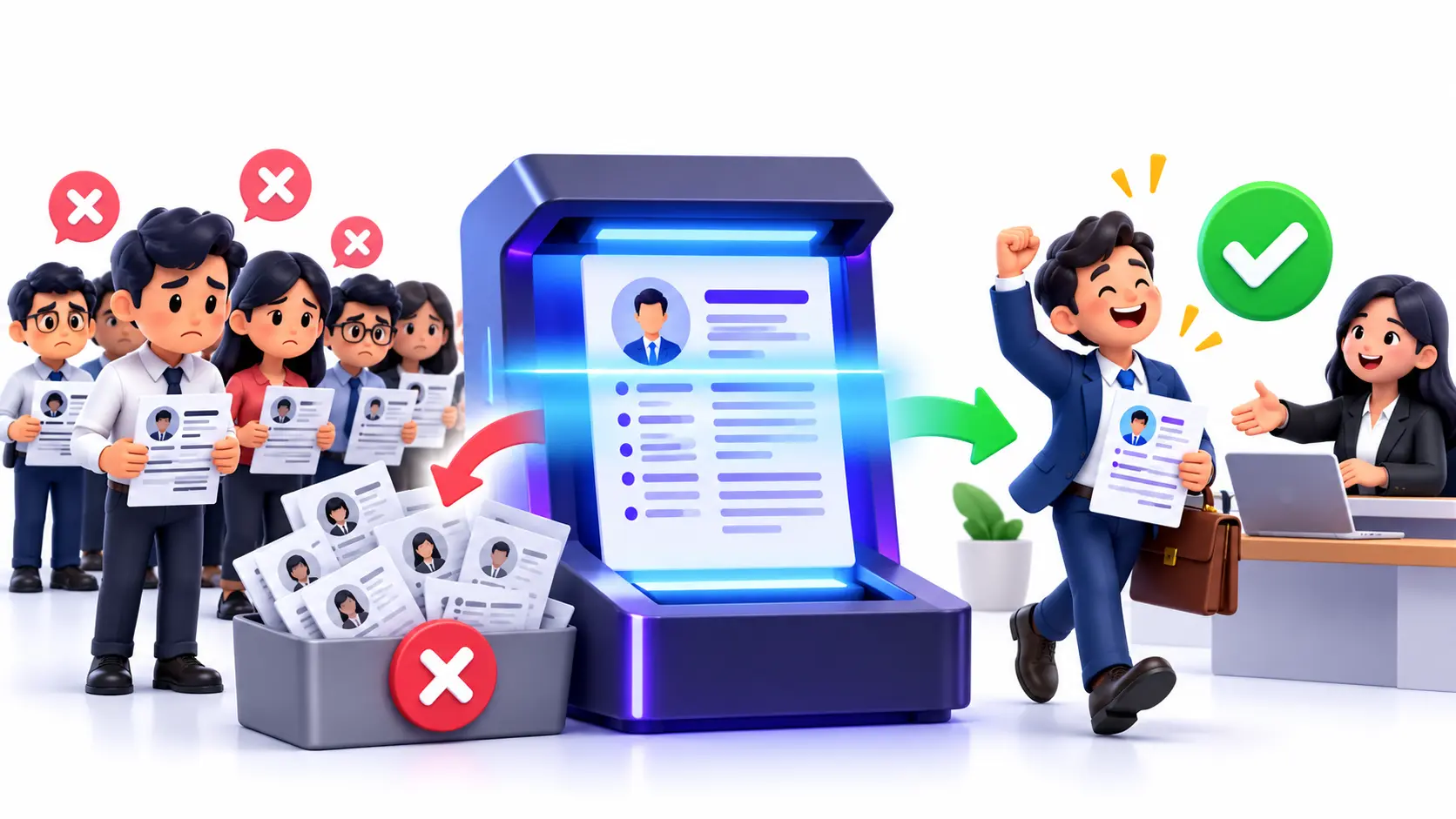
Can anyone guess Why Your Resume Getting Rejected by ATS?
Why your resume getting rejected by ATS? If you are asking that after sixty applications and zero interviews, this guide is for you.
Sixty applications. Zero interviews. You meet the requirements on almost every one of them, and still the same two outcomes: a polite rejection at 2am, or nothing at all.
So you search for an answer and find the same sentence on every site: *a robot threw your resume away before a human saw it.*
That sentence is mostly wrong. And believing it sends you off fixing fonts and stuffing keywords while the real problem sits untouched.
This guide explains exactly what happens to your resume after you click apply, where rejection genuinely is automatic (there is one place, and almost nobody talks about it), the nine real reasons you get filtered out, and a five-minute test you can run on your own resume right now.
Quick answer: In most companies the ATS does not auto-reject your resume. It parses it into a database and ranks it, and humans filter from there. Automatic rejection does happen in one specific place: the screening questions you answer before uploading. Your resume itself usually fails for three reasons: it parses badly, it does not contain the words the recruiter searches for, or it gives a human scanning it for seven seconds no reason to stop.
Who wrote this and how: it is based on how applicant tracking systems actually function, on recruiter surveys published in 2026, and on eye-tracking research into how recruiters read resumes. Every claim that comes from a study or survey is linked, so you can check it yourself instead of trusting another blog post.
What Actually Happens After You Click Apply|| Why Your Resume Getting Rejected by ATS
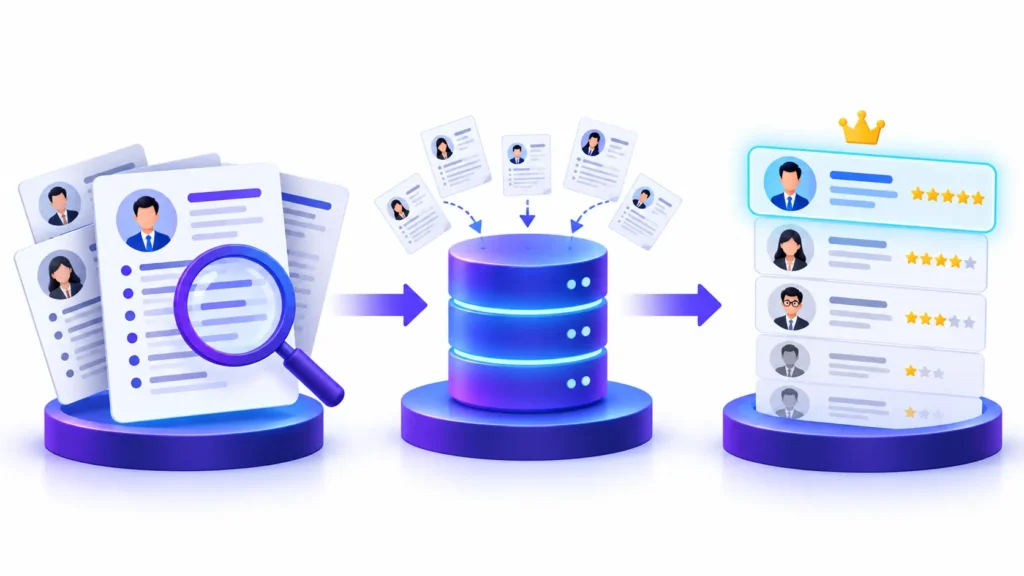
Four things happen, in this order. Knowing which one you are failing is the whole game.
Step 1: Screening questions (the only real auto-reject)
Before your resume is even uploaded, most application forms ask a few questions: Are you authorised to work in this country? How many years of experience do you have with X? Will you require sponsorship? What are your salary expectations?
These are called knockout questions, and recruiters configure them to disqualify applicants automatically. Recruiting platforms advertise this as a feature: one wrong answer moves you straight to the rejected pile without a human ever looking (source).
This is where “the system rejected me in four minutes” usually comes from. Not the resume. The form.
What to do: answer carefully and literally. If you have 4 years and 10 months, and the dropdown offers “3-5 years” and “5+ years”, pick the band that is true, not the flattering one. Never leave a required screening field blank, and be honest about work authorisation, because it is verified later anyway.
Step 2: Parsing
Your resume is broken into fields: name, contact, companies, job titles, dates, skills, education. This is where formatting either survives or dies. A resume that parses badly is not rejected, it is stored as fragments that never match anything.
Step 3: Recruiter search
A recruiter opens the ATS and searches the stored applications, usually by keyword, title, location and years of experience. If your parsed record does not contain the words they type, you simply do not appear. Nobody made a decision about you.
Step 4: The human scan
Once you show up in a shortlist, a person looks at your resume. In eye-tracking research by Ladders, recruiters spent an average of 7.4 seconds on an initial resume screen, and looked mainly at name, current title and company, previous title and company, dates and education (source).
Seven seconds. That is the real competition, and it decides more outcomes than any font choice.
The “75% of Resumes Are Auto-Rejected” Myth
You have seen this claim everywhere, usually with no source.
A 2026 recruiter survey found that 92% of recruiters say their applicant tracking system does not automatically reject resumes (source). Industry analysis has traced the original “75%” figure back to a misreading rather than to any published study (source).
Why this matters to you: if you believe a robot is the enemy, you will spend three weeks on keyword stuffing and formatting tricks. If you understand the four steps above, you will fix the step you are actually failing.
The 9 Real Reasons Why Your Resume Getting Rejected by ATS
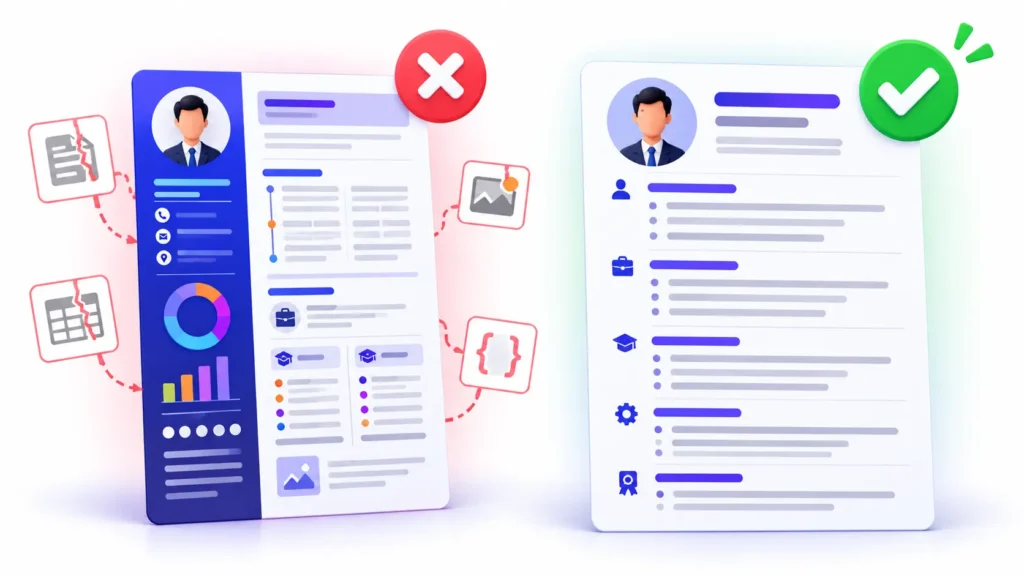
1. Your layout breaks the parser
This is the most common way a resume gets rejected by ATS before anyone reads a word of it.
Two columns, sidebars, text boxes, tables and design templates confuse parsers. The software reads across the page, so your skills column lands inside your work history and your job titles end up nowhere.
Fix: one single column, top to bottom, standard headings, no text boxes.
2. Your contact details are in a header, footer or image
Details placed in the header or footer of a Word file are frequently skipped. A logo, a photo or a skills chart contains text that no parser can read.
Fix: name, phone, email and city in the normal body of the document, as plain text.
3. You uploaded a file the system cannot read
A scanned or image-based PDF looks perfect to you and is completely empty to the parser. Design exports and unusual formats can fail the upload silently.
Fix: a text-based PDF or a .docx. Test it in five seconds: open your PDF and try to select a line of text with your mouse. If you cannot highlight it, no system can read it.
4. You do not use the words the recruiter searches for
Recruiters search with the vocabulary in their own job description. If the posting says “accounts payable” and your resume says “vendor payments”, you will not appear in that search even though it is identical work.
Fix: mirror the employer’s exact terms for skills you genuinely have. Our free ResumeAce AI compares your resume against a job description and lists the missing terms in seconds.
5. Your job titles are internal, not standard
Titles like “Officer Grade II”, “Associate Level 3” or “Consultant B2” mean nothing outside your company, and recruiters search by standard titles.
Fix: lead with the recognised title, keep the internal one in brackets: Financial Analyst (Officer Grade II).
6. Your dates and structure are inconsistent
Mixing “Jan 2023”, “01/2023” and “2023-24” in one resume causes parsing errors. Experience recorded as months instead of years quietly drops you out of “3+ years” filters.
Fix: one format everywhere: Mon YYYY – Mon YYYY. No gaps left unexplained in the timeline.
7. You send the same resume to every job
Mass applying feels productive and is the most common cause of long rejection streaks, because a generic resume matches nothing specifically. Now that anyone can fire off 200 applications with AI, generic gets buried faster than ever.
Fix: fifteen tailored applications will beat one hundred and fifty generic ones. Every time.
8. Your bullets list duties instead of results
This is what loses the seven-second scan.
Before: Responsible for monthly reporting and reconciliations.
After: Cut the monthly close from 6 days to 4 by automating 3 reconciliations, with zero audit findings in 2 years.
Before: Handled customer queries and escalations.
After: Resolved 40+ tickets a day at 96% CSAT, and cut repeat escalations 18% by fixing the top 3 recurring issues.
Fix: convert at least two bullets per role into a number, a timeframe or a comparison.
9. You are applying where you genuinely do not fit yet
Sometimes the rejection is correct. If the role asks for five years and you have one, or requires a licence you do not hold, no formatting fix changes the outcome.
Fix: apply where you meet roughly 70% of requirements, and put the remaining energy into closing one real gap.
The 5-Minute Test: Check Your Own Resume Right Now
Do this before you send another application.
- The highlight test. Open your resume PDF. Try to select the text with your cursor. Cannot highlight it? It is an image, and every system sees a blank page.
- The plain-text test. Copy your entire resume and paste it into Notepad or any plain text editor. Read what comes out. If sections are jumbled, if dates are separated from companies, or if whole blocks are missing, that is roughly what the ATS stored.
- The header test. Check whether your name and phone number survived the paste. If not, they are trapped in a header or an image.
- The keyword test. Put the job description and your resume side by side. Circle every skill and tool in the posting. How many appear word for word in your resume? Under half means you will not show up in the search.
- The seven-second test. Hand your resume to someone for seven seconds, then take it back and ask what job you do, where, and one thing you achieved. If they cannot answer all three, a recruiter will not either.
Most people fail tests 2 and 4. Both are fixable in an afternoon, and both are why a resume gets rejected by ATS without any feedback.
Not All Systems Reject Resumes the Same Way
Employers use different platforms, and the reason your resume was rejected by ATS can depend on which one you applied through.
| System | What job seekers commonly run into |
| Workday | Long forms, and it often asks you to re-enter experience manually even after uploading a resume. What you type in the fields is what gets searched |
| Taleo | Older parsers that are strict about formatting. Plain single-column resumes do noticeably better |
| Greenhouse, Lever | Cleaner parsing, fewer form fields, more weight on the resume itself |
| iCIMS, SuccessFactors | Heavy use of screening questions, so knockout answers matter as much as the resume |
You can usually tell which one you are in by looking at the application URL: it often contains the platform’s name.
Is a 70% ATS Score Good?
It is a reasonable working target, with two warnings.
First, that score comes from a third-party matching tool, not from the employer. Companies do not show you a score, and every tool calculates differently.
Second, the composition matters more than the number. A 70% that covers every essential requirement beats a 90% padded with skills you cannot defend in an interview.
Use the score to spot missing essentials, fix those, then stop optimising and start applying.
How to Avoid ATS Rejection: The Pre-Send Checklist
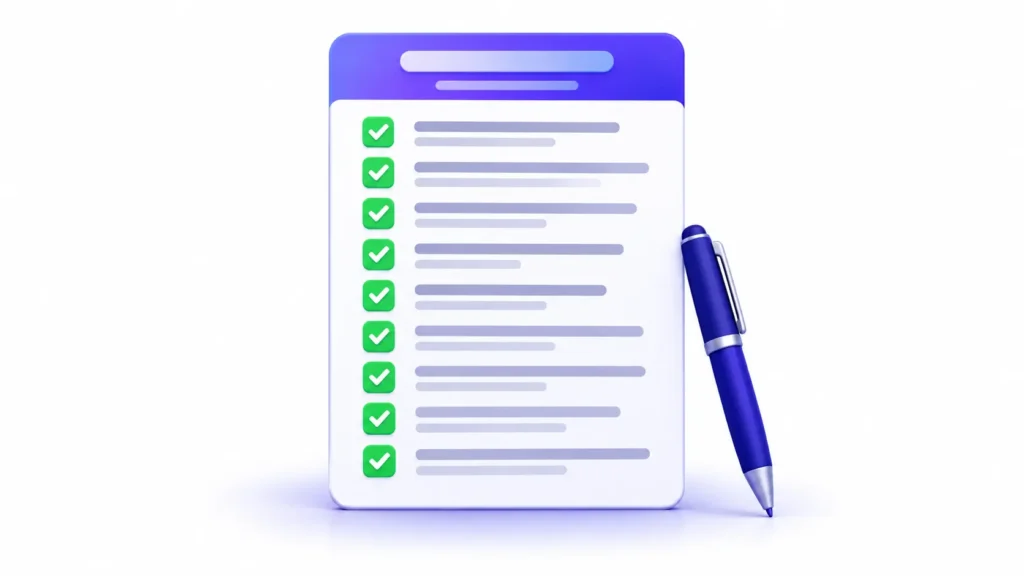
Four minutes before every application.
- Single column, no tables, text boxes, columns or photo
- Standard headings: Summary, Experience, Skills, Education
- Contact details in the body, not the header
- Text-based PDF, text selectable with the mouse
- File name: Firstname-Lastname-Role.pdf
- Target job title appears in your summary line
- Essential keywords from the posting present, in real sentences
- One date format throughout
- At least two measurable results per role
- One page under 8 years of experience, two pages beyond
- Screening questions answered truthfully and completely
Our step-by-step formatting guide goes deeper: how to make an ATS-friendly resume.
Why Is My Resume Getting Rejected by ATS Everywhere I Apply?
When rejections come from every company, formatting is rarely the cause. It is one of these four.
You are applying too late
Many roles are effectively decided in the first few days. Applying to three-week-old postings wastes most of your effort. Set alerts and apply within 72 hours.
You have no internal signal
An application that arrives with a referral is treated differently from one that arrives cold. One referral is worth roughly twenty cold applications.
Your target is too broad
Applying for five different kinds of role means five half-fitting resumes, none of them convincing.
You are aiming at the wrong level
In a market where employers can find exact matches, applying one level above your current scope fails quietly and constantly.
This combination is also why smart, qualified people stay unemployed far longer than they expect.
Can ChatGPT Fix My Resume?
Partly. Used well it is genuinely useful. Used lazily it is the reason your resume reads like everyone else’s.
What it does well
- Rewriting weak bullets into clear, result-focused lines
- Comparing your resume with a job description and listing what is missing
- Fixing tone, repetition and length
What it does badly
- It invents achievements and numbers when you let it, and anything you cannot defend will end the process at interview
- It writes in a generic voice that thousands of other applicants are also using
- It adds decorative formatting that breaks parsing
The safe method
You supply the facts. AI improves the wording. You verify every single number. If you want that in one step, ResumeAce AI is built for it and is free. And when the interview comes, employers increasingly ask how you use AI in your work, so having a clear answer helps you twice.
Can I Apply Again If I Got Rejected?
Yes. Reapplying is normal and is not held against you at most companies.
Same role: only if something changed. The posting was reopened, or you now hold a qualification it required. Reapplying two weeks later with the same resume rarely works.
Different role, same company: apply immediately. A rejection for one position says nothing about another.
Rule of thumb: wait about three months before going back to the same team, and make sure your resume shows something new when you do.
Can I Ask Why I Was Rejected?
You can ask once, politely. Many companies decline to give specifics for legal reasons, but recruiters do sometimes answer, and a single honest sentence can save you months of guessing.
Subject: Thank you, and one quick question
>
Hi [Name],
>
Thank you for letting me know about the [Role] position. I am keen to keep improving, so if you have a moment: is there one area where my profile fell short compared with the candidates you moved forward?
>
Any pointer is appreciated, and I would be glad to be considered for future roles.
>
Best regards,
[Your name]
Ask for one thing, keep it short, and never argue with the answer you get.
How Can I Get a Job If I Keep Getting Rejected?
When nothing is working, change the process instead of repeating it harder.
- Run the 5-minute test above and fix whatever breaks.
- Cut your target to two role types and build one strong resume for each.
- Apply within 72 hours of a posting going live.
- Send 10 tailored applications a week, not 100 generic ones.
- Get one referral a week. A short, specific message to someone inside the company beats a cold application.
- Answer screening questions carefully. This is where automatic rejection actually happens.
- Track your numbers. Applications, replies, interviews. Under a 5% reply rate means resume or targeting, not luck.
- Close one real gap. One tool or certification that keeps appearing in the postings you want. Before you spend money, read our honest take on which AI certifications are actually worth it.
Watch This Explained in 60 Seconds
We turn these job search questions into short videos every day: what breaks your resume, what recruiters actually search for, and what is quietly changing in hiring.
▶ Watch the reels on Instagram · Watch on Facebook · Subscribe on YouTube
New video every day, on the same topics covered in this guide.
Frequently Asked Questions (FAQs) for Why Your Resume Getting Rejected by ATS
Why is my resume getting rejected by ATS?
Usually because it parsed badly or because it does not contain the words the recruiter searched for. In most companies the system does not auto-reject resumes; it stores and ranks them, and humans filter. The exception is screening questions, which can disqualify you automatically.
Is a 70% ATS score good?
It is a reasonable target, but the score comes from a third-party tool, not the employer. Covering every essential requirement matters more than the number itself.
How do I avoid ATS rejection?
Single-column layout, standard headings, a text-based PDF, contact details in the body, keywords mirrored from the job description, consistent dates, and screening questions answered truthfully.
Why is my resume getting rejected everywhere?
Constant rejections usually point to targeting rather than formatting: applying late, applying too broadly, aiming at the wrong level, or applying with no referral.
Can ChatGPT fix my resume?
It can sharpen wording and find missing keywords, and that helps. It should never invent experience, and every number it writes must be checked by you.
Can I apply again if I got rejected?
Yes. For a different role, apply immediately. For the same role, wait around three months and make sure something on your resume has genuinely changed.
Should I apply to the same job if I got rejected?
Only if the posting has been reopened, or your profile now meets a requirement it did not before.
Can I ask after being rejected why I was rejected?
Yes, once and politely. Many employers will not give details, but some recruiters do, and that feedback is worth more than another fifty applications.
Does a two-page resume get rejected by ATS?
No. Page count is not a parsing issue. Two pages are normal beyond roughly eight years of experience, as long as the layout stays simple.
Do ATS systems reject PDFs?
Modern systems accept text-based PDFs. The problem is scanned or image-based PDFs, which contain no readable text at all.
The Bottom Line
So, why is my resume getting rejected by ATS? Not because a robot destroyed it. It is being disqualified at the screening questions, stored as unreadable fragments, or skipped in seven seconds because nothing on it stood out.
Fix the format so the system can read you. Use the employer’s own words for skills you really have. Answer the screening questions truthfully. Then send fewer, sharper applications.
That combination moves reply rates faster than anything else in job hunting, and it costs nothing but an afternoon.
About the author: Pankaj Khanna is the founder of WhyWorkAI. He has spent over 10 years in corporate finance roles at global companies, where he has hired, trained and led teams, and has reviewed hundreds of resumes from the hiring side of the table.
Editorial note: WhyWorkAI does not sell placements, guarantees or shortcuts. This guide cites its sources so you can verify each claim yourself. Last reviewed September 2026.