Is AI an Enemy or a Friend for Job Seekers? An Honest 2026 Answer
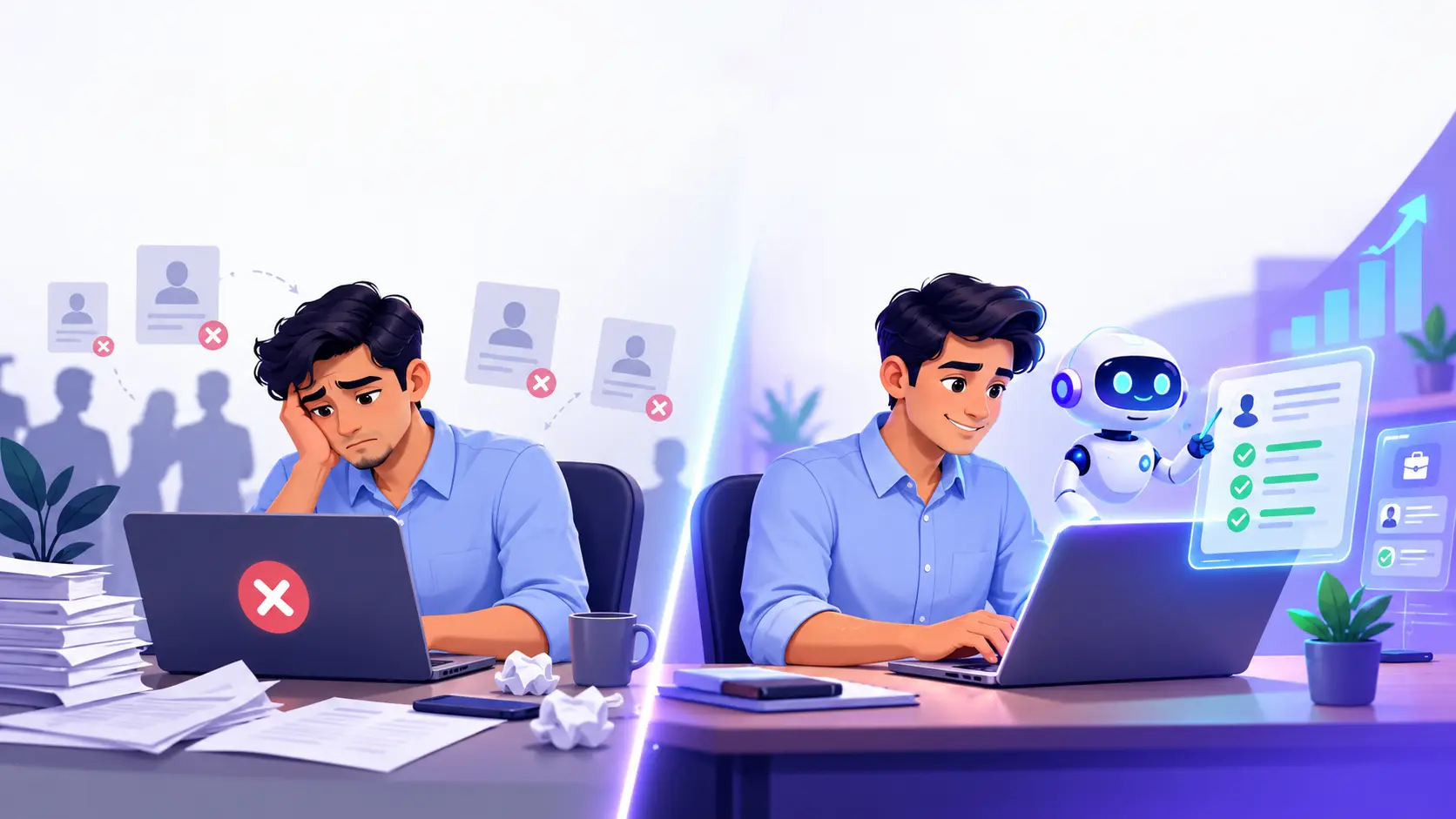
Is AI an enemy or friend for job seekers? If you are job hunting right now, it probably feels like both. It rejects your resume before a human reads it. It writes cover letters for the 400 other people applying to your role. And then the same technology helps you prepare for the interview you finally get.
So which is it: friend or foe?
The honest answer is that AI is neither. It is a filter. It removes people who work the old way and rewards people who adapt. This guide gives you the real picture, with numbers, and shows you exactly where AI hurts job seekers and where it helps.
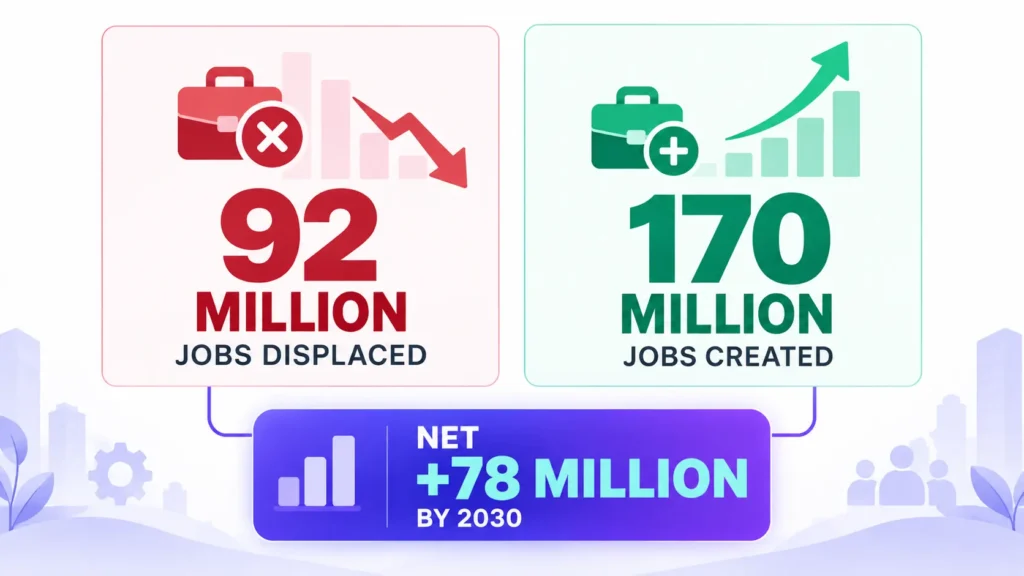
Quick answer: AI is an enemy to job seekers who apply the same way they did five years ago, and a friend to those who use it. Research from the World Economic Forum expects 92 million jobs to be displaced by 2030 but 170 million new ones to be created, a net gain of 78 million. The risk is real. So is the opportunity.
Everything below is based on published labour-market research and on how hiring actually works today, not on predictions about robots. Where a claim comes from a report or a public statement, the source is linked so you can check it yourself.
Is AI an Enemy or a Friend for Job Seekers?
Both, depending on which side of the process you are on.
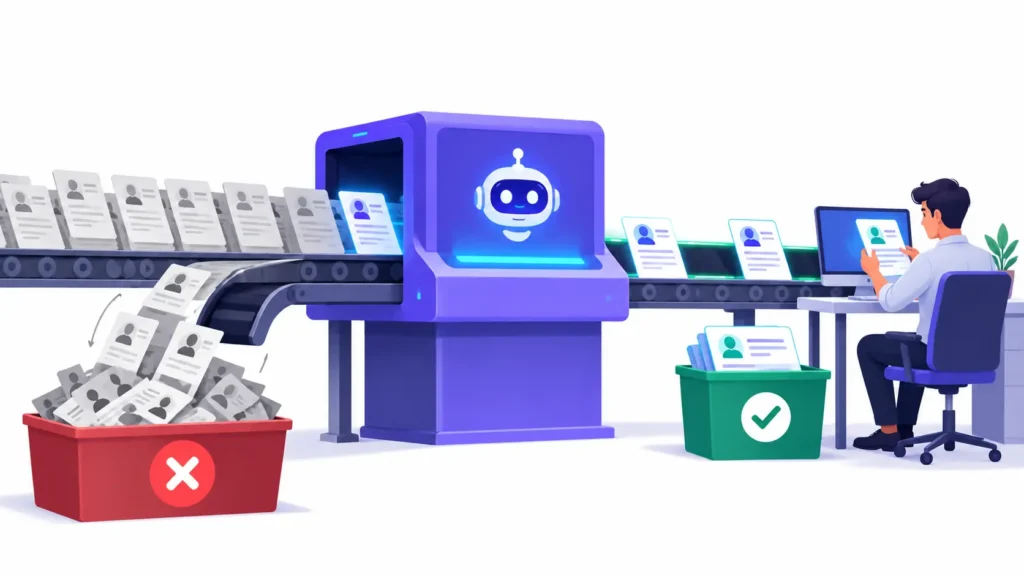
AI is an enemy when it stands between you and a human being: screening software that rejects your resume in seconds, automated assessments, and hiring teams so flooded with AI-written applications that they trust applications less than before.
AI is a friend when it sits on your side of the table: helping you understand a job description, rewrite your experience clearly, research a company before an interview, and practise answers out loud.
The same technology, two completely different outcomes. The difference is whether you are using it or only being judged by it.
What the Numbers Actually Say
Fear spreads faster than data, so here is the data.
The World Economic Forum’s Future of Jobs Report 2025 projects that by 2030, technology and other forces will displace around 92 million jobs while creating around 170 million new ones, a net increase of about 78 million (source). The same report finds that a large share of today’s skills will be outdated within five years.
Read that carefully, because both halves matter:
- 92 million jobs disappearing is not a small number. If your role is repetitive and rule-based, that risk is real and it applies to you.
- 170 million jobs appearing is a bigger number. But those jobs go to people who have the new skills, not automatically to the people who lost the old jobs.
We looked at this split in detail in our guide on whether AI is replacing jobs or creating opportunities. This is why “AI will take all jobs” and “AI will create more jobs, relax” are both wrong. Jobs are being redistributed, and the people who move with it win.
What Did Bill Gates Warn About AI?
This question comes up constantly, so here is what he actually said.
In 2025, Bill Gates said that within ten years AI will handle many tasks currently done by doctors and teachers, and that humans “won’t be needed for most things” (source). He has described this as the arrival of “free intelligence”, widely available expertise that used to be scarce and expensive.
Two things are worth remembering before you panic.
First, it is a prediction, not a measurement. Experts disagree sharply about timelines, and technology forecasts have a long history of being early or wrong.
Second, even in that scenario, the work does not vanish, it changes shape. Someone still has to decide what to ask, judge whether the answer is right, and take responsibility for the outcome. That is where careers are moving.
Where AI Is Genuinely an Enemy to Job Seekers
Let’s be specific rather than dramatic. These are the real problems.
1. Your resume is read by software first
Applicant tracking systems parse, score and rank resumes against the job description. We break this down step by step in our guide to making an ATS-friendly resume. A resume with heavy formatting, columns or graphics can be read incorrectly, and good candidates get filtered out for reasons that have nothing to do with ability.
2. Applications have exploded
AI makes it trivial to apply to hundreds of jobs. Recruiters receive far more applications than before, spend less time on each, and rely more on filters.
3. Entry-level tasks are shrinking
A lot of junior work was routine: formatting reports, first-draft writing, basic research, data cleanup. That work is exactly what AI does well, so some employers hire fewer juniors.
4. Your experience can go stale quietly
If your daily work is a process that software can now do end to end, your experience loses value even while your job still exists.
5. AI screening can be unfair in ways you cannot see
You rarely learn why you were rejected, so you cannot fix it. This is one reason smart, qualified people stay unemployed longer than they expect.
Where AI Is a Powerful Friend
Now the other side, and this is the part most job seekers underuse.
1. It decodes job descriptions
Paste a posting and ask what the role actually does day to day, which requirements are non-negotiable, and which skills you already have under a different name.
2. It makes your resume match the role
Our free ResumeAce AI tool does this for you: paste your resume and the job description, and it shows which keywords you are missing. Not by lying, but by using the words the employer uses. “Managed reconciliations” versus “account reconciliation and variance analysis” can be the same work described in two different vocabularies.
3. It is a free interview coach
PrepGenie generates the questions you are likely to face, based on your resume and the job you applied for. Practise your answers and fix the weak ones. Doing this three times before an interview changes how you sound.
4. It prepares you for the company
Summarise annual reports, recent news and product changes in minutes, so your questions in the interview sound informed.
5. It closes skill gaps fast
Learning Excel automation, SQL basics or data analysis is significantly faster with an AI tutor that answers your specific stuck-point.
6. Using AI is itself a hiring signal
Employers increasingly ask candidates how they use AI in their work. Having a clear, responsible answer puts you ahead of candidates who do not.
One habit separates people who benefit from AI from people who get caught out by it: they read every output before it leaves their hands. AI is confident even when it is wrong, and the person who sends it is the one held responsible.

Which 3 Jobs Will Survive AI?
People search for a list of three safe jobs. There is no such list, and anyone selling you one is guessing. What does exist is three categories of work that are hard to automate.
1. Work where a human must be accountable
Doctors, auditors, lawyers, engineers signing off on safety. AI can draft the analysis, but someone with a licence and legal responsibility has to own the decision.
2. Work that is physical and unpredictable
Electricians, plumbers, nurses, technicians, skilled trades. Every job site is different, and robots are still expensive and inflexible compared with a trained human.
3. Work built on trust and relationships
Senior sales, negotiation, therapy, teaching younger children, leadership. People want a person, especially when the stakes are emotional.
For the opposite view, the roles growing fastest, see our breakdown of high-paying AI careers and what they actually require. Notice what these have in common: judgment, responsibility and physical presence. The safest thing you can do in any role is move toward those, and away from repetitive output.
AI in the Workplace: Real Examples
This is what “AI at work” actually looks like today, across functions.
| Function | How AI is used now |
|---|---|
| Finance and accounting | Drafting variance commentary, spotting anomalies in large data sets, explaining formulas |
| HR and recruitment | Screening and ranking applications, writing job descriptions, drafting interview questions |
| Customer support | Drafting replies, summarising ticket patterns, routing queries |
| Marketing | Outlines, first drafts, headline variations, campaign summaries |
| Software | Code suggestions, writing tests, explaining unfamiliar code |
| Operations | Meeting transcripts to action items, process checklists, first-pass reports |
In almost every example, the pattern is identical: AI produces the first version, a human checks it and takes responsibility. That pattern is the job description of the future, in every function.
What Are the Benefits of AI in the Workplace?
Microsoft’s workplace guidance on using AI safely at work makes the same point: the gains are real, but only when a person stays responsible for the output. For employees, when it is used properly:
- Routine drafting and formatting take far less time
- Fewer errors in repetitive checks, because software does not get bored
- Faster answers when you are stuck, without waiting for a colleague
- More time for the work that gets you promoted: judgment, analysis and relationships
For employers: lower cost per unit of output, faster turnaround, and smaller teams handling bigger workloads. That last one is precisely why job seekers feel the pressure. Both things are true at once.
AI and Employees: What Is Actually Changing
The change is not that everyone gets replaced. It is that teams get flatter and smaller, and the work moves up a level.
What used to be “produce the report” becomes “review, question and sign off on the report”. Fewer people do more, with better tools. Roles that were once one job are becoming half a job plus a new skill.
That is the real workforce shift, and it explains why job hunting feels harder even when total employment numbers look fine.
Is Artificial Intelligence a Blessing or a Curse?
It is a tool that reduces the value of repetition and increases the value of judgment.
If your career is built on doing the same task reliably, this feels like a curse. If it is built on making decisions, understanding people and owning outcomes, it is a blessing, because the boring part of your job is getting cheaper.
The uncomfortable truth is that plenty of people are currently in the first group. The good news is that moving to the second group is a matter of months of deliberate effort, not years.
Can AI Turn Evil? And Who Dislikes AI?
Two questions that come up a lot, answered plainly.
Can AI turn evil?
Not in the movie sense. Today’s AI has no goals, feelings or intent. The real risks are ordinary and practical: confident wrong answers, bias learned from training data, misuse by people, and companies over-trusting automated decisions. Those are serious, and they are human problems, not villain robots.
Who dislikes AI?
Mostly people with something concrete at stake: workers in roles being automated, creative professionals whose work was used for training without consent, and teachers and managers dealing with unchecked AI output. Their objections are practical rather than emotional, and job seekers should take them seriously rather than dismiss them.
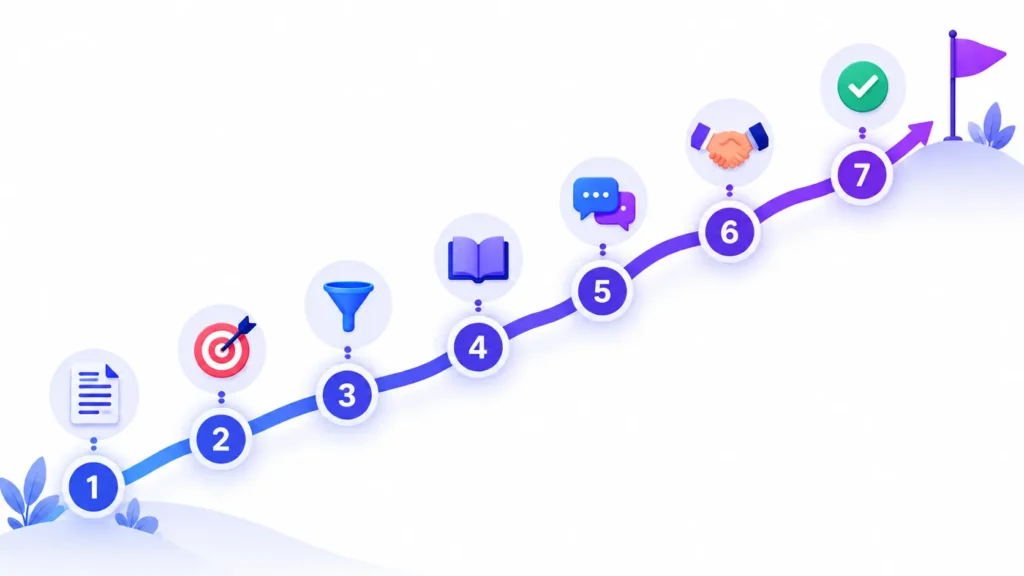
Your 7-Step Plan as a Job Seeker
- Make your resume machine-readable. Single column, standard headings, no text inside images, saved as a text-based PDF.
- Tailor to each posting. Mirror the employer’s own words for skills you genuinely have, and check the match with ResumeAce AI before you hit send.
- Apply to fewer jobs, better. Twenty tailored applications beat two hundred generic ones, especially now that everyone can send two hundred.
- Learn one AI skill properly for your field. For finance that might be automating reconciliations; for marketing, campaign analysis; for support, ticket summarisation. Before paying for a course, read our honest take on which AI certifications are actually worth it.
- Prepare an answer to “how do you use AI in your work”. One task, one AI step, one thing you check yourself, one result.
- Keep building the human parts. Judgment, communication, ownership. These stay scarce, and they decide what you are really worth in the market.
- Never send unchecked AI output. One fabricated fact in an interview task can end a process.
Watch This Explained in 60 Seconds
We turn these career questions into short videos every day: what AI screening does to your resume, how to answer AI questions in interviews, and what is actually changing at work.
▶ Watch the reels on Instagram · Watch on Facebook · Subscribe on YouTube
New video every day, in Hinglish, on the same topics covered in this guide.
Frequently Asked Questions
Is AI a friend or an enemy for job seekers?
Both. It is an enemy to job seekers who compete on repetitive skills and apply generically, and a friend to those who use it to target roles, prepare properly and learn faster.
What did Bill Gates warn about AI?
In 2025 he predicted that within a decade AI will do much of what doctors and teachers do today, and said humans “won’t be needed for most things”. It is a prediction, and experts disagree on the timeline.
Which 3 jobs will survive AI?
There is no fixed list. The three safest categories are work requiring human accountability, physical and unpredictable work, and work built on trust and relationships.
Will AI replace my job?
More likely it will replace parts of it. If most of your day is repetitive and rule-based, treat that as a warning to move toward judgment-based work.
Is AI a blessing or a curse for workers?
A blessing if your value comes from decisions and relationships, a curse if it comes from repetition alone. Which group you are in is partly your choice.
Can AI turn evil?
No. It has no intent. The genuine risks are wrong answers stated confidently, bias, and people misusing it.
Should I use AI to write my resume?
Use it to structure and sharpen your real experience. Never to invent experience you do not have, because it falls apart in the interview.
Do employers reject candidates for using AI?
Rarely for using it. They reject candidates who send obviously unchecked output, or who cannot explain their own work in their own words.
The Bottom Line
AI is not coming for your job. It is coming for the parts of your job that can be repeated, and it is changing what employers look for.
Job seekers who treat it as an enemy spend their energy resisting. Job seekers who treat it as a tool use it to apply smarter, prepare harder and learn faster, and they are getting the interviews.
The first group is competing with software. The second group is using it. Pick the second.
About the author: Pankaj Khanna is the founder of WhyWorkAI. He has spent over 10 years in corporate finance roles at global companies, where he has hired, trained and led teams.